
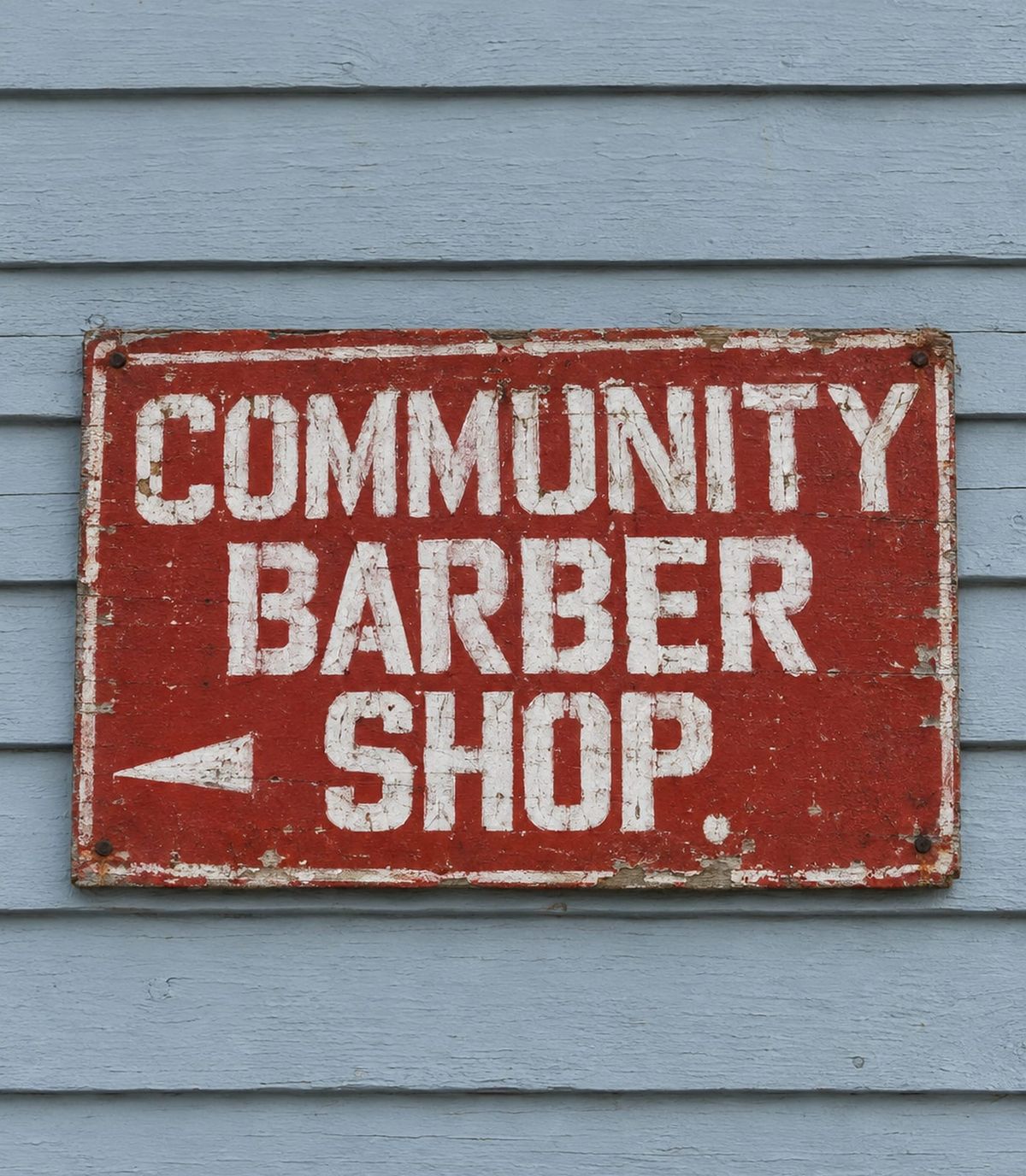
Community Barber Shop closes after more than half a century of history in Roanoke
The traditional barbershop in northwest Roanoke, USA, ceased operations after decades of service. The location was a central point for the Black community and a vital space for social exchange.
In Roanoke, Virginia (United States), the closing of Community Barber Shop marks the end of an era for barbershop professionals and the city's northwest neighborhood. On September 10th, George “David” Thompson, 78 years old, gave his last cut in the chair, ending a cycle that began in 1965. For those working in barbering, this case is relevant because it demonstrates how the establishment functioned far beyond technical service, acting as a true social and informational hub for the local community.
The shop's history is intrinsically linked to the commercial evolution of the region. Thompson began his journey in 1969 at 205 11th Street NW, an area that was the heart of Black commerce in the 1960s and 1970s. At that time, barbershops were meeting points where sports, politics, and neighborhood news were discussed. The operation moved to the Cove Road area around 1975, consolidating its presence at the current address, which was built in 1980.
The formation of the partnerships that sustained the business is a classic example of trust among colleagues. Thompson recounts that Grover Ham proposed the partnership with a direct phrase: “I didn’t ask you for money.” This union allowed the establishment to survive and grow, counting on other renowned barbers over the years, such as Lanvan Reid and Abraham Traynham Jr., in addition to Thompson.
The differentiator of Community Barber Shop was never just technique. Thompson, who also worked for 38 years in the automotive industry, maintained a fast pace of quick cuts but dedicated time to conversation. During the COVID-19 pandemic, when he limited customer entry to avoid crowds, he realized that people missed not only the cut but the exchange of information and the welcome. The space even served as a place where men encouraged each other to take care of their health and vote.
With the definitive closing, the community loses more than a service; it loses a historical reference point. Thompson summarized the essence of the place with simplicity: “The name Community speaks for itself.” For many clients, the location was where boys became men, where news circulated, and where friendship was built between one scissor snip and another. The barbershop's history is now recorded not only by the addresses it occupied but by the memories of entire generations.
BarberRicci newsroom, with information from The Roanoke Rambler.